

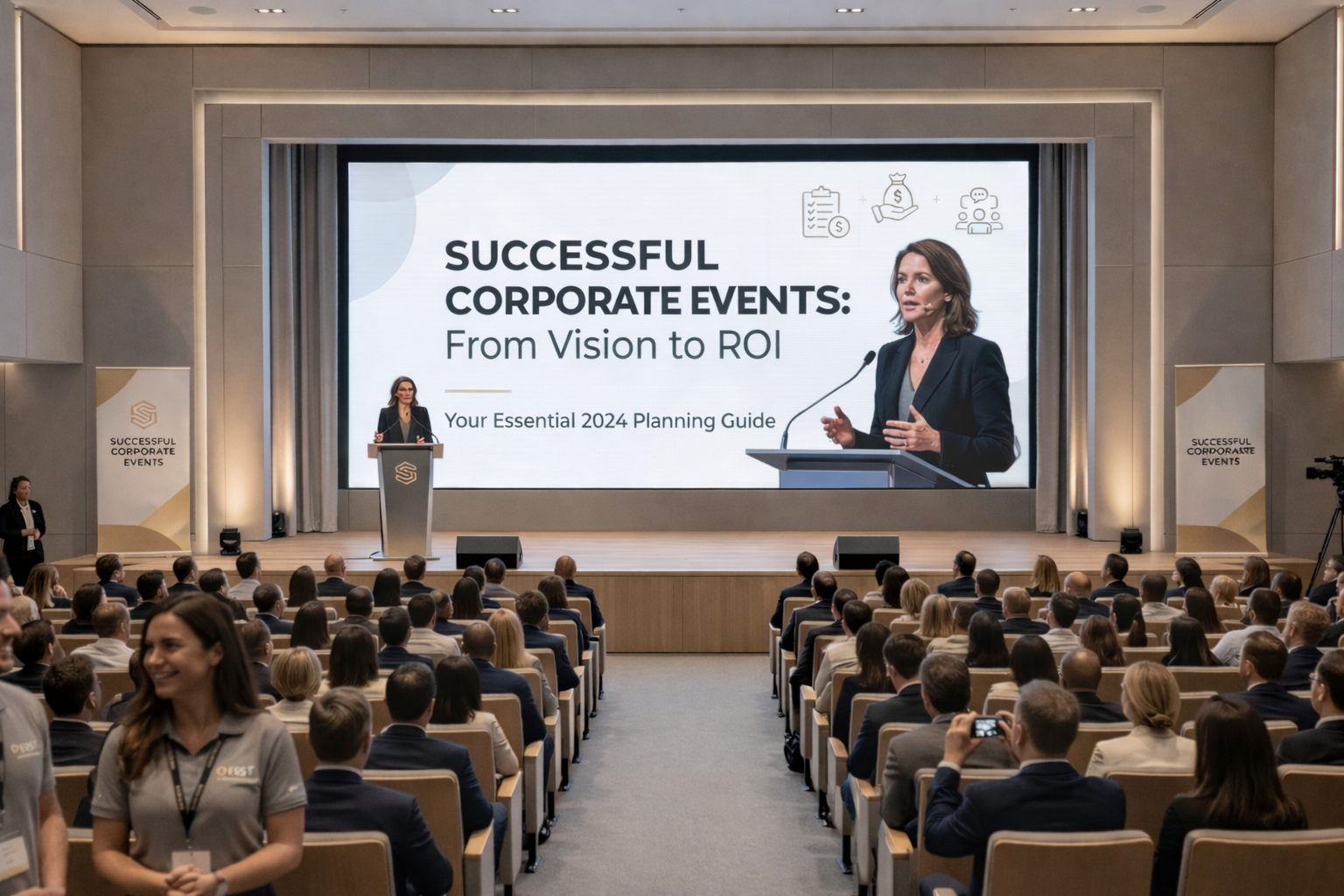
The Strategic Blueprint: How to Plan a Corporate Event Successfully in 2026
The corporate event landscape has undergone a seismic shift. In 2026, events are no longer just logistical checkmarks; they are high-stakes strategic assets designed to drive pipeline growth, brand authority, and employee retention. Whether you are planning a high-tech product launch or an intimate leadership retreat, success requires a fusion of intentional design, cutting-edge technology, and data-driven marketing.
This guide outlines the essential framework for orchestrating a world-class corporate event that delivers measurable impact.
1. Defining Intent: The Strategic Pre-Planning Phase
Before scouting venues or selecting caterers, you must define the "why." Every successful event in the modern ecosystem begins with a clear alignment between the gathering’s purpose and the organization’s broader business goals.
Setting SMART Objectives
Identify what success looks like 12 months in advance. Are you aiming for:
Market Penetration: Measured by qualified lead volume.
Cultural Cohesion: Measured by employee net promoter scores (eNPS) and alignment surveys.
Thought Leadership: Measured by session engagement and post-event content downloads.
The 10-15% Contingency Rule
Inflation and rising vendor costs mean that transparent budgeting is more critical than ever. Beyond obvious costs like venue and catering, experts recommend building a 10-15% contingency fund to cover "hidden" fees such as high-speed WiFi surcharges, last-minute AV labor, and permit costs.
2. Venue Selection: The Architecture of Experience
In 2026, 48% of organizers are moving away from traditional hotel ballrooms in favor of "special event venues" like art galleries, theaters, and repurposed industrial spaces.
The "Blank Canvas" Advantage
Top-tier venues now offer permanent 360-degree projection mapping. This technology allows you to transform a room from a minimalist corporate setting to an immersive branded universe without the cost of physical set builds. When evaluating a venue, prioritize:
Technical Infrastructure: High-bandwidth connectivity for hybrid streaming.
Spatial Flexibility: Areas for networking, wellness zones, and "micro-learning" pods.
Sustainability Profile: Certifications like LEED or BREEAM.
3. The Tech Stack: Orchestrating Engagement
The modern event tech ecosystem must integrate seamlessly with your CRM to prove ROI.
Platform Type | Top-Rated 2026 Options | Key Strengths |
|---|---|---|
Enterprise Management | Cvent | Complex logistics, lead capture, and deep reporting. |
Experiential Marketing | Bizzabo | Immersive branding and personalized attendee journeys. |
Networking & Matchmaking | Whova | AI-driven attendee matchmaking and gamification. |
The Role of AI and Automation
AI is now a standard tool for personalizing the attendee experience. Generative AI tools are used for automated session recommendations, real-time translation, and sentiment analysis during live Q&A sessions.
4. Digital Amplification and SEO Strategy
To maximize reach, your event's digital presence must be optimized for both human readers and AI search engines.
Strategic Content Clusters
Establish topical authority by creating "Pillar Pages" (e.g., The Complete Guide to 2026 Corporate Events) and linking them to "Cluster Pages" (e.g., Sustainable Catering Trends).
Voice Search Optimization: Use natural language headers like "How much does it cost to hire a corporate event planner?".
Multimedia Dwell Time: Embedding video content can increase the chance of a first-page Google ranking by 53%.
5. Sustainability and Inclusion: The New Standard
Corporate social responsibility (CSR) is no longer an optional add-on. Attendees and stakeholders now expect "purpose-driven" events.
Eco-Friendly Operations: Prioritize locally sourced menus, zero-waste catering, and digital-only materials via QR codes.
Neurodiversity and Wellness: Design events with quiet zones, movement breaks, and sensory-friendly environments to support all attendees .
6. Measuring Success: The ROI Formula
The ultimate measure of a corporate event is its return on investment. In 2026, planners use a multi-dimensional approach to quantify value.
To calculate the financial efficiency of your event, use the standard ROI formula:
Beyond the Spreadsheet: Return on Experience (ROE)
While revenue and leads are vital, don't ignore intangible wins like brand sentiment shifts and the value of new industry partnerships. 77% of consumers report that their trust in a brand increases significantly after interacting with it at a live event .
Post-Event: Nurturing the Momentum
The event doesn't end when the lights go out. To prevent an engagement drop-off, follow these post-event steps:
Send personalized thank-you emails within 24 hours .
Repurpose event content into "on-demand" webinars and LinkedIn clips to extend your SEO reach .
Analyze performance data within two weeks to refine your strategy for the next cycle.
Ready to elevate your next gathering? By focusing on strategic intentionality and leveraging the latest in event technology, you can transform a simple meeting into a powerful engine for business growth.